Your food
Food quality and nutrition
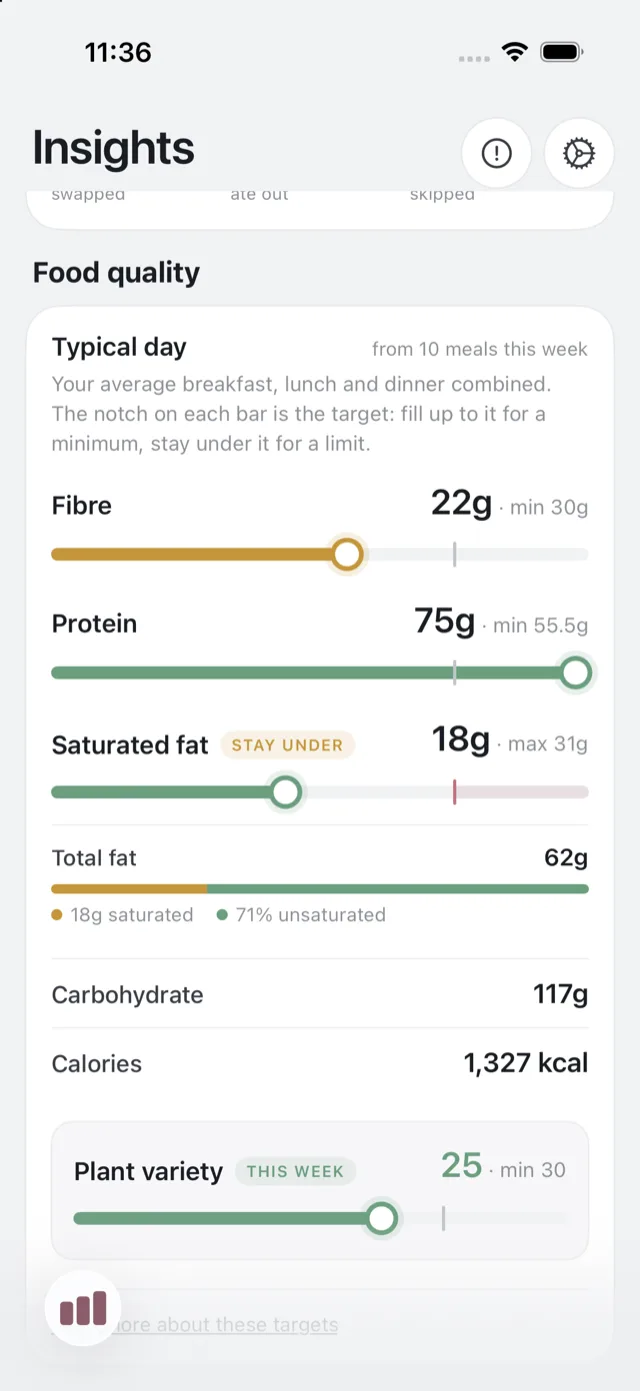
The Food quality panel describes the nutrition of the Bolus meals you actually ate.
Only the meals you ate
The panel is headed “From the Bolus meals you ate”, and that is the whole rule. Meals you ate out or skipped are not counted, so a busy week never drags the figures down. Bolus is not trying to account for everything that passed your lips; it is describing the food it planned and you cooked.
How it is shown
Typical day combines your average breakfast, lunch and dinner into one day, and says how many meals it was drawn from. In your first days, before there is a typical day to describe, it shows what it has and says so.
Each figure with a target is a bar with a notch: fill up to the notch for a minimum, stay under it for a limit. Fibre and protein are minimums; saturated fat is marked “stay under”. Total fat, carbohydrate and calories are numbers with nothing attached.
Plant variety
A count of the different plants you ate across the week, out of 30. It is the one figure counted across the whole week rather than day by day. It is a rough measure of diversity rather than quantity, and it comes from research into gut health rather than from a government intake figure, which is why it is presented separately.
What the numbers are compared against
Where a comparison is shown, it is a UK reference intake, for example “max 31g” against saturated fat, or “min 30g” against fibre. These are population reference figures, not targets Bolus has set for you, and Bolus deliberately shows no target for carbohydrate or calories. Targets that vary by sex, like protein, are set from the details you gave at setup.
Nutrition values are calculated from ingredients using McCance and Widdowson’s The Composition of Foods, and manufacturers’ labels where that dataset does not cover a product.
These describe the food. They are not a prescription, and they are not dosing guidance. See Bolus’s approach to nutrition.